

How Much Income Do You Really Need To Qualify for a Mortgage?
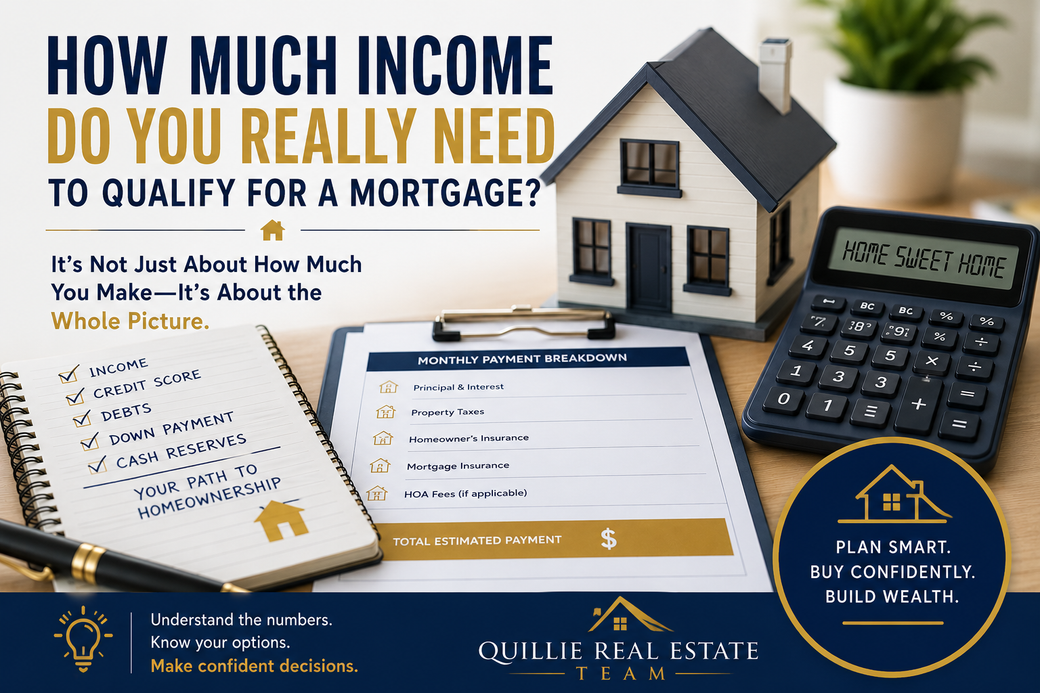
How Much Income Do You Really Need To Qualify for a Mortgage?
One of the most common questions buyers ask is, “How much money do I need to make to qualify for a mortgage?” The answer may surprise you. There is usually no single minimum income number that automatically qualifies or disqualifies you from buying a home.
What lenders really want to know is whether your income is stable, documentable, and enough to comfortably support the mortgage payment along with your other monthly debts.
My Buyer Insight:
Mortgage approval is not just about how much you earn. It is about how your income, debts, credit, down payment, and cash reserves work together.
There Is No One-Size-Fits-All Income Requirement
A buyer earning a modest income may still qualify if their debt is low, credit is strong, and the payment fits the lender’s guidelines. On the other hand, a buyer with a high income may still run into trouble if they have heavy car payments, credit card debt, personal loans, or other obligations.
This is why two buyers with the same income can qualify for very different purchase prices.
The Big Number Lenders Watch: Debt-to-Income Ratio
Your debt-to-income ratio, often called DTI, compares your monthly debt payments to your gross monthly income. This includes the new estimated mortgage payment plus other monthly debts such as:
- Car payments
- Credit card minimum payments
- Student loans
- Personal loans
- Other mortgage or installment debt
Simple Example
Monthly gross income: $6,000
Total monthly debt including proposed mortgage: $2,500
Debt-to-income ratio: about 41.7%
In many cases, that type of ratio may still be workable, depending on the loan program, credit score, down payment, reserves, and overall strength of the file. Guidelines can vary by lender and loan type, so it is important to get reviewed before assuming you do or do not qualify.
The 28/36 Rule Is a Helpful Starting Point
A common affordability guideline is the 28/36 rule. This means your housing payment should ideally be around 28% or less of your gross monthly income, and your total monthly debt should ideally stay around 36% or less.
This is not a hard rule for every loan, but it is a helpful starting point when you are trying to understand what payment may feel comfortable before you start shopping.
Know the Payment Before You Fall in Love With the House
Before you focus only on the sales price, look at the full estimated payment: principal, interest, property taxes, insurance, mortgage insurance if applicable, HOA fees, and estimated cash needed to close.
That gives you a clearer picture of whether the home truly fits your monthly budget.
What Types of Income Can Be Used?
Lenders can often use more than just regular salary income. The key is whether the income can be documented, is stable, and is likely to continue.
- Wages or salary
- Overtime, bonuses, or commissions
- Self-employment income
- Retirement or pension income
- Social Security income
- Disability income
- Rental income
- Interest or dividend income
- Alimony or child support, when properly documented
For self-employed buyers, lenders usually look closely at tax returns, business income, deductions, and consistency over time. This is where planning ahead can make a major difference.
Income Is Important, But It Is Not the Whole Story
Mortgage approval is based on your total financial picture. In addition to income, lenders may review:
- Credit score and credit history
- Employment history
- Down payment
- Cash reserves after closing
- Property taxes and insurance
- Loan type and underwriting guidelines
This is why a buyer should not rely only on online calculators or guesswork. A true mortgage review can show what price range, payment range, and loan options actually fit.
Some Loan Programs Are Designed To Help More Buyers Qualify
Some programs are built to help buyers with lower down payments, moderate income, or specific eligibility situations. These may include FHA, VA, USDA, conventional low-down-payment options, and state or local assistance programs.
Some programs may have income limits rather than income minimums, meaning you may need to be under a certain income level to qualify for that specific assistance or affordable lending program.
What Buyers Should Do Before Shopping
Before you start looking at homes, it is wise to review the numbers first. A strong buyer plan should include:
- Reviewing your income and monthly debts
- Checking your estimated payment comfort zone
- Getting pre-approved before touring homes
- Understanding taxes, insurance, and possible HOA costs
- Comparing loan options before making an offer
My Advice as a Realtor With a CPA & Lender Background
Do not start with the question, “How much will the lender approve me for?” Start with, “What payment can I comfortably handle, and what price range keeps me financially strong after closing?”
Final Thoughts
You do not need a magic income number to qualify for a mortgage. What matters most is whether your income is stable, your debts are manageable, your credit profile is acceptable, and the monthly payment fits.
If you are thinking about buying a home in Metro Atlanta, the best first step is to review your numbers before you fall in love with a property. That gives you confidence, protects your budget, and helps you move faster when the right home comes along.
Thinking About Buying a Home?
On all listings, I have already created an estimated payment breakdown for you using the Quillie Real Estate TEAM payment calculator. The results can show the estimated monthly payment, down payment, projected property taxes, insurance, and estimated cash-to-close, giving you a clearer picture of the numbers before you schedule a showing or take the next step.
Explore Homes by Metro Atlanta Counties MapDisclaimer: Mortgage guidelines vary by lender, loan program, borrower profile, and underwriting approval. This article is for general educational purposes only and is not a loan approval or financial advice. Speak with a qualified mortgage professional for guidance based on your specific situation.
Categories
Recent Posts










GET MORE INFORMATION